
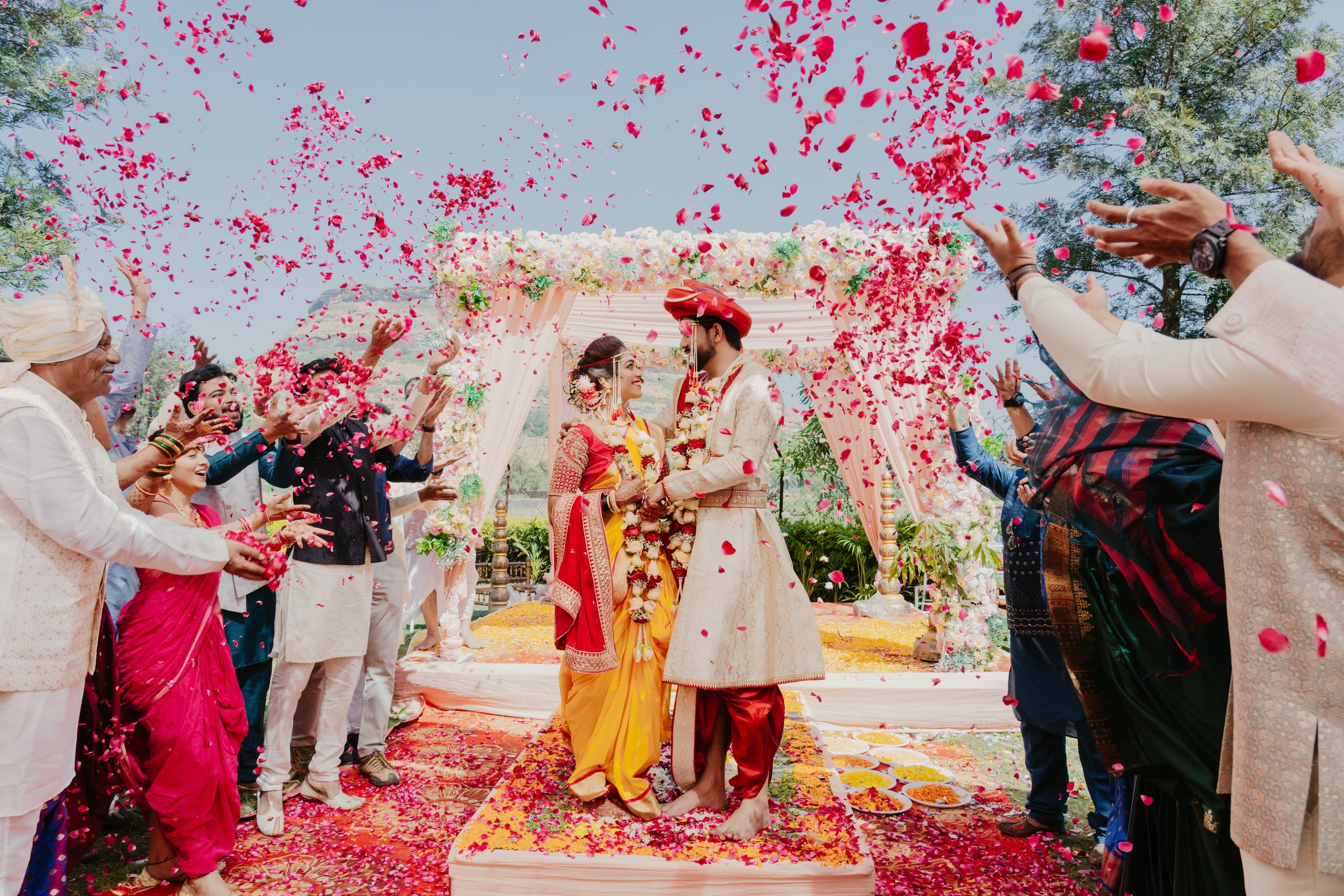
A Maharashtrian wedding moves fast and early. The muhurat is often before the city has finished its morning chai, the antarpat comes down in a single charged second, and the whole thing carries a warmth that is easy to miss if you do not know where to look. Photographing one well is less about equipment and more about knowing the sequence in your bones, so you are standing in the right place a beat before each moment lands.
If you are a Maharashtrian family planning a wedding in Mumbai, this is a guide to what a photographer who actually understands your rituals will do differently, ceremony by ceremony. It doubles as a checklist for judging whether the studio you are about to book truly gets your wedding, or just shoots weddings in general.
Why cultural fluency changes the photos
You can hire a technically excellent photographer who has never shot a Maharashtrian wedding, and they will still miss things, not from lack of skill but from lack of anticipation. They will not know the emotion peaks the instant the antarpat drops. They will not know to watch the bride's mama during the kanyadaan. They will not know that the sindoor and mangalsutra moments happen quickly and do not wait for anyone to reframe.
A photographer who has shot your kind of wedding before is already in position for these. That is the entire value of community experience, and it is the same argument we make in our main guide to choosing a wedding photographer in Mumbai: the person who knows what is coming captures it, and the person who does not is always half a second late.
We have shot Maharashtrian weddings across the city, from Amey and Apoorva's to Manali and Ajay's, and the rhythm below is what we plan around every time.
The rituals, and what a good photographer is doing at each
Sakharpuda (the engagement). The exchange of sugar and the saree, the two families formally coming together. Warm, intimate, often in a smaller room with tricky light. The frames worth having here are the elders' faces and the quiet exchange between the couple, not just the ring shot.
Haldi. Turmeric, laughter, colour, and no chance of posing. This is where the candid photographer earns their fee, and it is such a distinct challenge that we gave it its own guide on shooting a haldi as a candid photographer. For a Maharashtrian haldi, the light is usually good and the emotion is loud, which is a gift if you are ready for it.
Gauri Har and the muhurat. The bride's moment with the goddess, and the approach to the actual wedding hour. Tender, and easy to overlook if the photographer is only watching the stage.
Antarpat. The cloth held between the couple so they cannot see each other, lowered at the muhurat as the mangalashtaka are sung. This is the single most charged second of a Maharashtrian wedding. A photographer who knows it is not watching the couple as the cloth drops. They are watching the parents, and they have a second camera on the couple's first look. Miss this and you have missed the wedding. We plan two angles for it, every time.
Kanyadaan and Lajahoma. The giving away, the offerings into the sacred fire. Ritual heavy, emotion heavy, and full of small gestures between families that a documentary eye lives for.
Saptapadi, sindoor and mangalsutra. The seven steps, the sindoor in the parting, the tying of the mangalsutra. These come quickly and matter enormously. You want a photographer close and ready, not one who has wandered off for a tea.
Varat and the reception. The celebration, the send off, the vidaai. The vidaai in particular is where the day's held emotion finally breaks, and it is often the most powerful set of frames in the whole album.
Candid or traditional for a Maharashtrian wedding?
Both, as always, but the balance is worth thinking about. Maharashtrian weddings are rich in genuine, unguarded emotion, which makes them ideal for a documentary, candid approach. The posed portraits still matter for the family, but the frames you will return to are almost always the unposed ones: the tears at the antarpat, the laughter at the haldi, the elders watching.
If the candid frames are what you care about, read our piece on candid wedding photography in Mumbai before you shortlist, because plenty of studios use the word without doing the real thing.
Should you add a film?
A Maharashtrian wedding is full of sound: the mangalashtaka being sung, the ceremony chants, the family around you. A photograph cannot hold any of it. A wedding film can, which is why so many Maharashtrian couples who book only photography tell us afterwards they wish they had filmed it. If you are weighing it, our guide to cinematic wedding films in Mumbai explains what a film captures that stills cannot, and the sung ceremony is a strong example.
How to test whether a studio really knows Maharashtrian weddings
- Ask them to describe the antarpat moment. If they know to cover both the couple's first look and the parents' faces, they have done this before.
- Ask to see a full Maharashtrian wedding gallery, not a mixed highlights set. You want to see they covered every ceremony, not just the pretty ones.
- Check the elders are in the frames. Maharashtrian weddings are family events. A studio that only photographs the couple has missed the point of the day.
- Ask about the early start. Many muhurats are early morning. A team that plans for dawn light and a pre sunrise call time knows your wedding.
Where you are getting married still matters
Community fluency and local knowledge stack. A Maharashtrian wedding in the western suburbs has both a ritual rhythm and a Bandra rhythm, and the best outcome comes from a team that understands both. If your venue is on that side of the city, our note on finding a wedding photographer in Bandra covers the local logistics worth planning for.
We shoot Maharashtrian weddings as insiders, not tourists
We are a Mumbai based team, and Maharashtrian weddings are among the celebrations we know best. We plan around the antarpat before we arrive, we cover the vidaai with the care it deserves, and we photograph your family, not just the two of you.
Look through our Maharashtrian wedding stories and see whether the moments land for you. When they do, tell us about your wedding and we will walk you through how we would shoot it.
FAQ
Do I need a photographer who has shot Maharashtrian weddings specifically?
It genuinely helps. The rituals move quickly and the key moments do not repeat. Someone who knows the sequence is in position for them. Someone who does not will miss a few.
What is the most important moment to get right?
The antarpat, the moment the cloth drops and the couple see each other, is the emotional peak. It needs two angles: the couple's first look and the parents watching. Ask any photographer how they cover it.
Are Maharashtrian weddings suited to candid photography?
Very. They are full of genuine, unguarded emotion, which is exactly what documentary photography is built to capture. You will still get posed family portraits, but the candid frames tend to be the keepers.
Should we book a wedding film as well?
If the sound of the ceremony matters to you, and for a sung Maharashtrian ceremony it usually does, yes. A film holds the chants and voices that a photograph cannot.